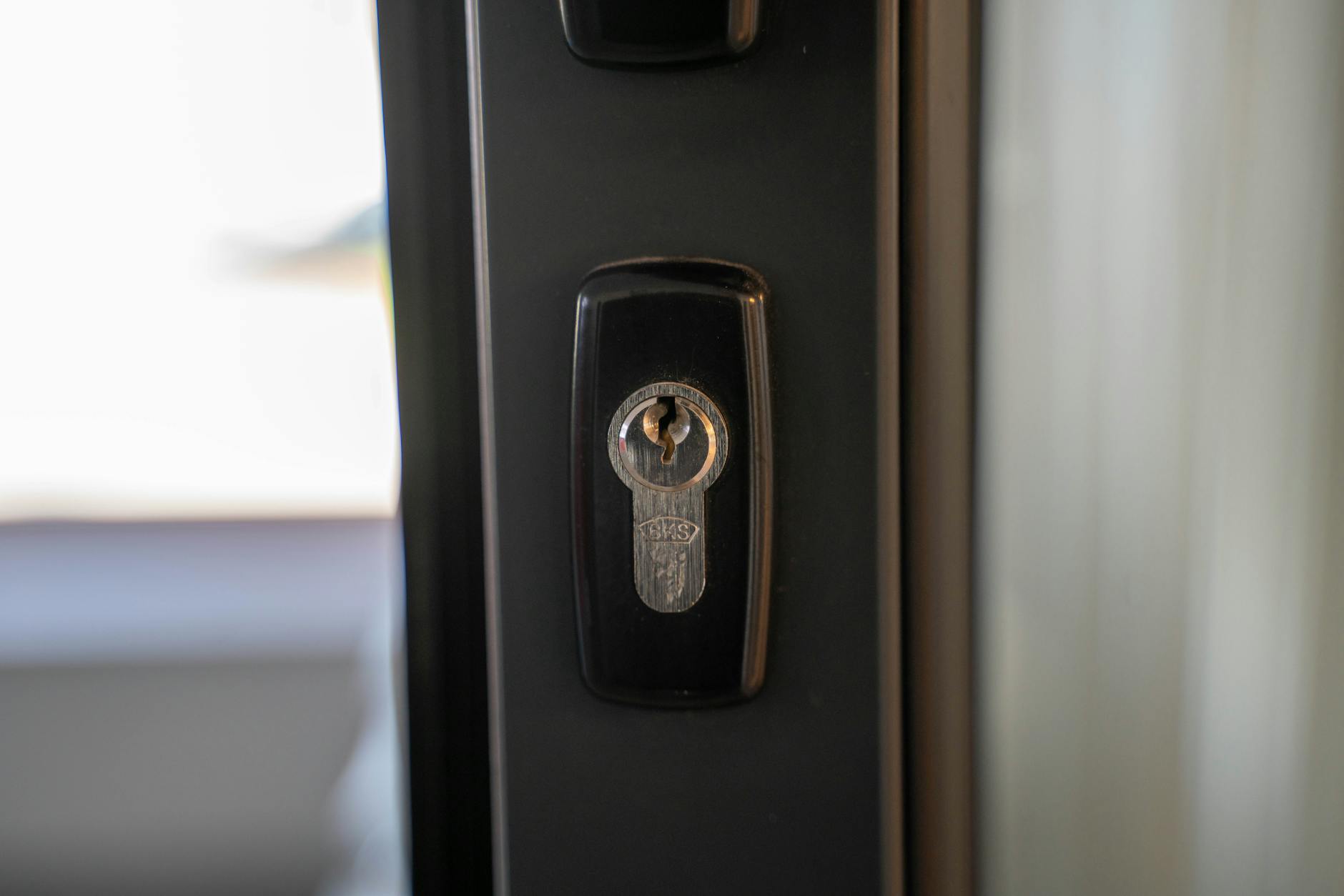
A stuck door lock is frustrating, but it's not always a broken lock requiring professional replacement. Sometimes the solution is as simple as applying lubricant or cleaning out debris. Sometimes it's a key that's worn or a lock that's merely cold and stiff. Before calling a locksmith—which costs money and requires scheduling—there are several things you can check and fix yourself. Understanding what you're dealing with helps you avoid unnecessary service calls and sometimes solves the problem immediately.
The first diagnostic is determining exactly how the lock is stuck. Can you insert the key at all, or does it stop partway in? When the key is inserted, can you turn it, or is it completely jammed? Does the key turn smoothly, but the bolt doesn't move? Does the knob or lever turn freely, but the lock won't cycle? The specific symptom tells you what's wrong. A key that won't insert suggests debris or a bent key. A key that inserts but won't turn suggests internal pin binding or a warped cylinder. A key that turns but produces no bolt movement suggests a mechanical disconnection inside the lock.
Test your key in another lock if you have one. Does the same key work fine in your car's door while failing in your home door? That indicates a problem with the home lock, not the key. Does the key fail in all locks? Then the key itself is the issue—it's bent, worn, or damaged. A worn or bent key can jam any lock, so if this is your diagnosis, get a fresh key cut before attempting more troubleshooting. A locksmith can examine the original key and create a proper duplicate if the original is damaged, but this costs nothing compared to unnecessary lock replacement.
Lubrication and Basic Troubleshooting
Applying lubricant often unsticks a binding lock immediately. But use the right lubricant—graphite powder is ideal for locks. Graphite is dry and doesn't attract dirt the way oil does. WD-40 or 3-in-1 oil work in a pinch, though they're not ideal for locks because they get sticky over time and accumulate dust. Never use silicone spray on a lock; it can degrade rubber seals. Insert the graphite nozzle into the lock and work the key in and out several times to distribute it. The lock should loosen up within a few minutes.
If you don't have graphite powder, pencil lead works in an emergency. Take a sharpened pencil and mark the key teeth with graphite, then insert and work the key in and out repeatedly. The graphite transfers into the lock. It's not as efficient as a graphite-spray lubricant, but it's often effective for a minor bind.
Cold weather causes metal to contract, sometimes sticking locks temporarily. If your lock is frozen, applying heat can help. Use a heat gun on low setting, hair dryer, or even a hot (not boiling) piece of metal—a spoon heated under hot water works—held near the lock mechanism. Warm the lock gradually to avoid cracking the surrounding frame. Once warmed, apply graphite lubricant. Don't use boiling water directly on the lock; the thermal shock can crack the cylinder or frame.
Moisture and salt spray cause corrosion inside locks, leading to binding. If you live near the ocean or use salt on icy walkways, your locks are at higher risk. Prevention through regular lubrication every six months keeps them functioning. If corrosion has already occurred, graphite lubricant might temporarily improve function, but the internal components are probably damaged. Rekeying or replacement becomes necessary.
When Professional Help Is Actually Needed
If lubricant hasn't improved the situation after several applications and several minutes of gentle working the key in and out, something more serious is wrong. A snapped key stuck inside the lock requires a locksmith or drill-out removal. Bent cylinder housing, broken pins, or a severely corroded mechanism can't be fixed by the homeowner. If you've tried the basic troubleshooting steps and the lock remains stuck, professional intervention is warranted.
Additionally, if the lock works in one direction but not another—it opens easily but won't close, or vice versa—this suggests internal mechanical failure. A single malfunctioning pin or a broken spring can't be fixed with lubrication alone. Two Keys Mobile in North Little Rock can diagnose and repair or replace the lock depending on the severity of the damage.
One final check: is the door itself warped or swollen from humidity? A door that's swollen presses the bolt assembly askew, sometimes making it difficult or impossible to operate the lock even though the lock itself is fine. Try turning the key in the lock without attempting to open the door. If the lock turns freely and smoothly, the problem is the door frame or bolt housing position, not the lock. Reducing the door's swelling through ventilation or professional door adjustment fixes the real problem.
Taking fifteen minutes to troubleshoot before calling a locksmith often saves a service call. Simple lubrication fixes most minor sticking. If basic steps don't work, you've confirmed that professional service is needed and the locksmith won't waste time diagnosing obvious problems. This saves both time and money.